Table of Contents
- Timber vs. Composite Decking: Which Is Right for Your Hillsborough Home?
- Timber Decking: Warm Look, Hands-On Care
- Composite Decking: Low-Maintenance Durability for Aussie Conditions
- Timber vs Composite: Cost, Comfort and Lifestyle Fit
- Conclusion: Choose the Deck That Matches Your Weekends
Timber vs. Composite Decking: Which Is Right for Your Hillsborough Home?
Planning a new deck is exciting, but choosing between timber and composite can feel daunting. Both options can look fantastic and handle our coastal breezes around Newcastle and Lake Macquarie. The real question is which suits your budget, maintenance habits, and backyard lifestyle.
In this guide, we’ll walk through how each material performs in Aussie conditions, what it really costs over time, and which suits different types of households. By the end, you’ll know which option fits you, not just “in theory”, but for your actual home and weekends. If you want design ideas while you read, browse JGBUILD’s recent decking projects for inspiration.
Timber Decking: Warm Look, Hands-On Care
Natural timber is still a favourite across Newcastle and Warners Bay for good reason. It has real grain, subtle colour changes, and a warmth you notice the moment you step outside. Common species for local decks include treated pine, merbau, spotted gum and blackbutt, each with its own colour and hardness profile.
Upfront, timber almost always comes in cheaper per square metre than quality composite, especially if you stick with treated pine or one of the popular mid-range hardwoods. That can make a big difference when you’re trying to stretch a renovation budget across a deck, pergola and maybe a new fence. Timber is also simple for many builders to work with, and it suits a wide range of deck shapes and levels.
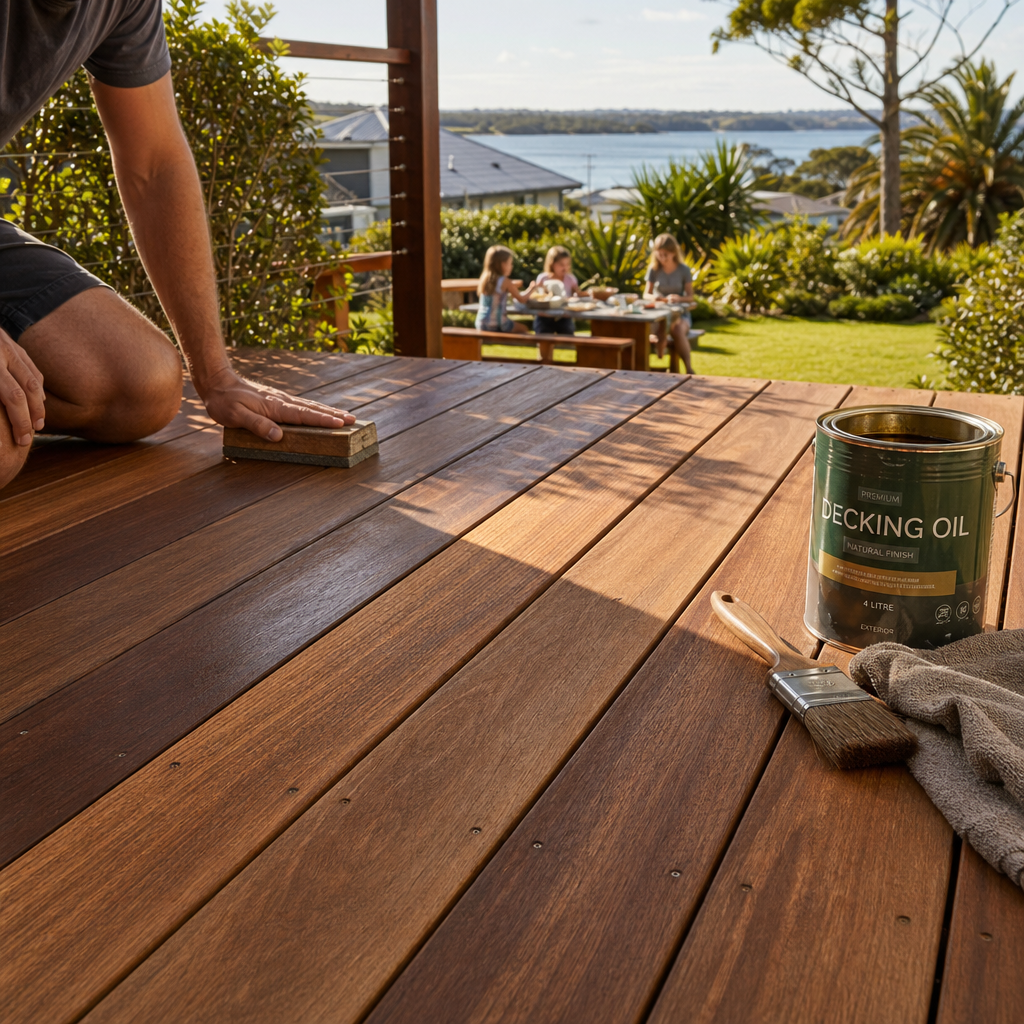
The trade-off is maintenance. To keep a timber deck looking sharp in our harsh sun and coastal air, you’ll need regular cleaning and re-coating with oil or stain. Skip a couple of years and boards can grey off, crack, and even start to rot in damp corners. Termites are another real risk in Australia, which means proper treatment and inspections matter if you choose wood for your outdoor area.
On the upside, timber is a renewable resource when sourced from responsibly managed forests. If you love the idea of a natural product and don’t mind a bit of weekend work with the brush, a well-built timber deck can still last many years and age with character. For more on how JGBUILD finishes and protects timber decks, take a look at our outdoor living services.
Composite Decking: Low-Maintenance Durability for Aussie Conditions
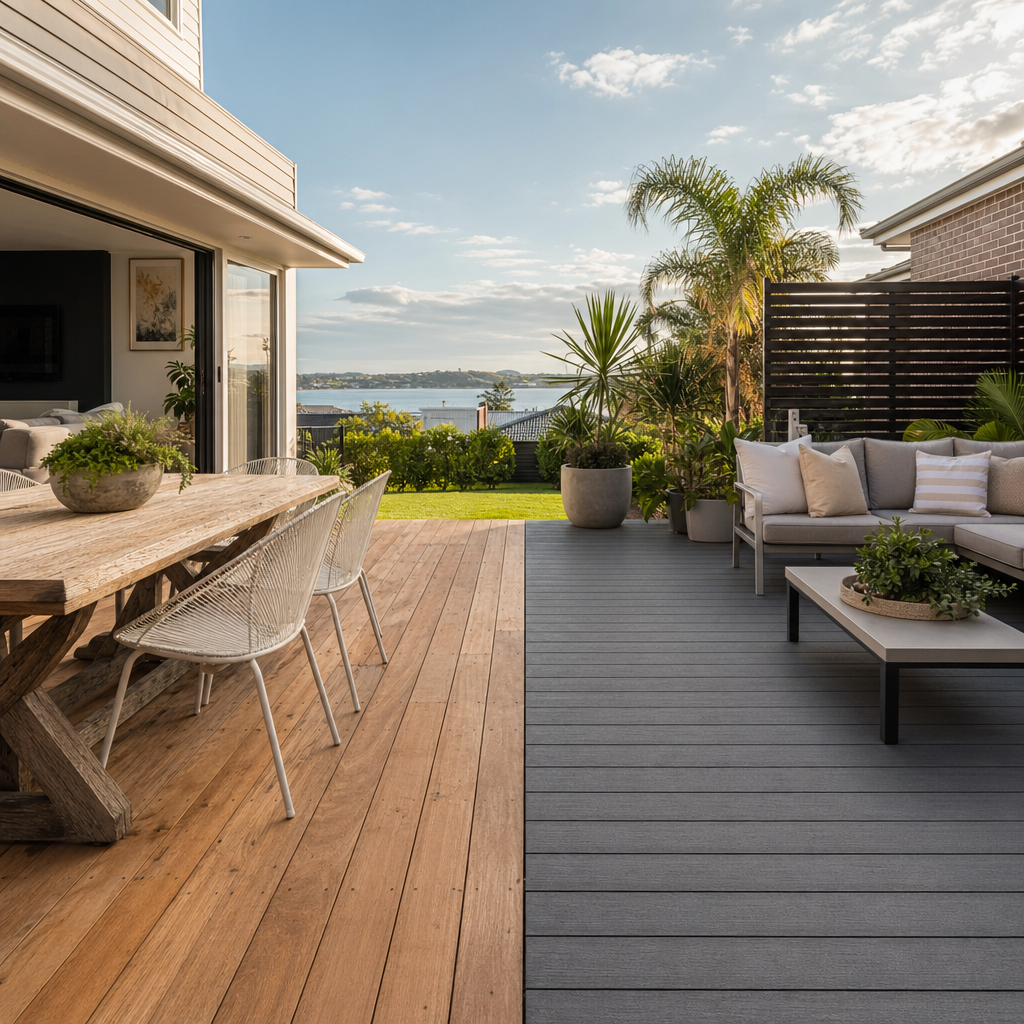
Composite decking is made from a mix of wood fibres and plastics, often with a tough outer “cap” to resist fading and stains. It’s designed to tackle exactly the issues that frustrate many timber deck owners: ongoing maintenance, splinters, and damage from moisture or pests. Around Lake Macquarie and Dora Creek, that can be a big advantage near the water.
The first thing most people notice is the price tag. Quality composite boards usually cost more per square metre up front than most timber options. But while timber needs regular sanding and oiling, composite typically only needs a wash with soapy water a few times a year. That means far fewer weekends spent on deck maintenance and more time actually using the space.
Composite boards are also built to resist rot, warping and termites, which are major causes of deck failure in Australia. Many brands offer 20 – 30 year residential warranties for structural performance and colour stability, far longer than most timber coverage. This long lifespan is one reason composite decking often works out cheaper over the life of the deck, even if it costs more to install at the start.
There are a few downsides to weigh up. Composite can feel hotter under bare feet in full summer sun, especially in darker colours, although lighter boards and some newer technologies help reduce heat build-up. The look is more uniform too: modern boards mimic timber grain very well, but they don’t have the same natural variation as real wood. If you want a deck you can largely “set and forget”, especially near a pool or in a termite-prone area, composite is worth serious thought. You can see how JGBUILD blends composite with landscaping and entertaining areas in our project gallery.
Timber vs Composite: Cost, Comfort and Lifestyle Fit
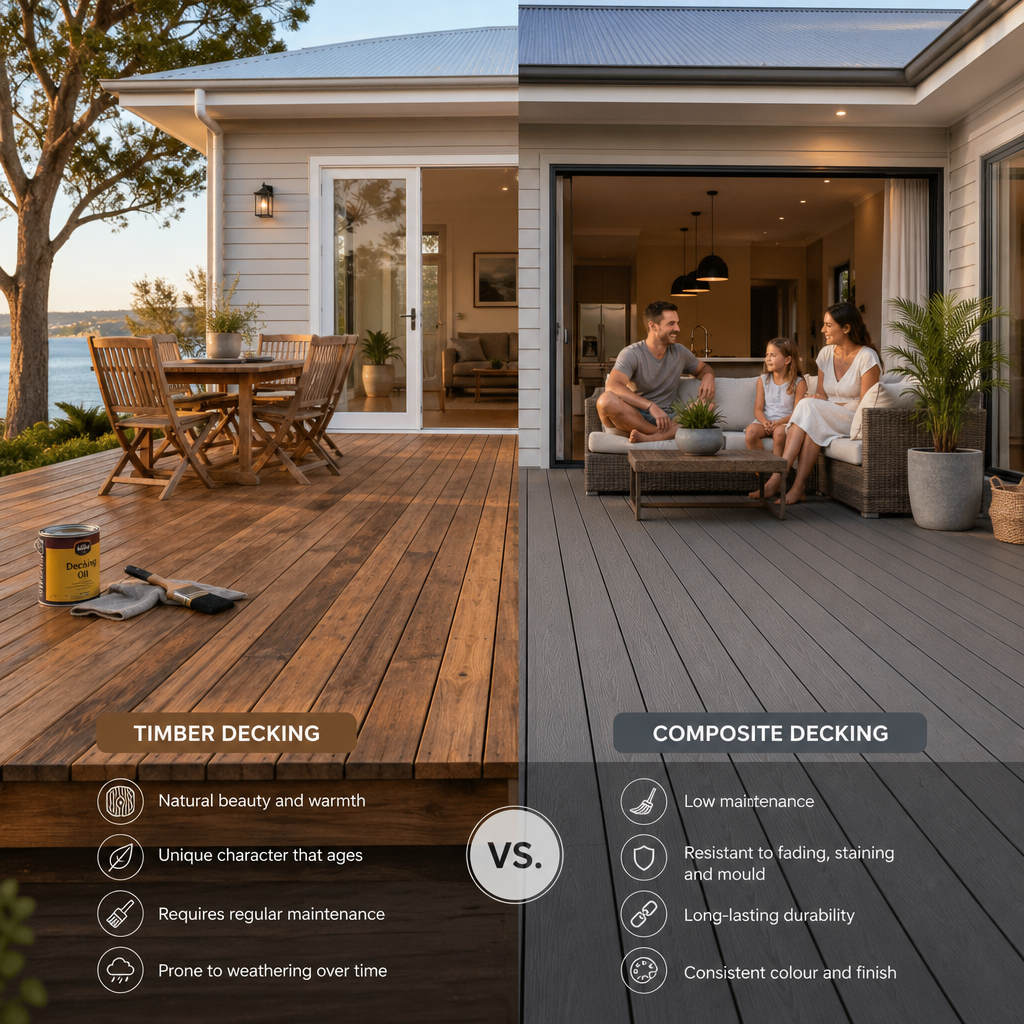
So how do you decide which way to go for your Hillsborough or Toronto home? Start with how long you plan to stay. If this is your “forever” place and you want a deck that keeps its looks with minimal fuss, composite often wins on total cost over 15 – 25 years because you avoid repeated sanding, oiling and board replacement. If you’re working to a tight build budget and may renovate again in a few years, timber’s lower starting price can still be attractive.
Next, think about how you actually use your deck. Families with kids and pets usually lean toward composite because it’s splinter-free and many products offer good slip resistance, which is handy around wet feet and dog claws. For keen entertainers who want a cooler surface for bare feet in full sun, a well-shaded composite deck or a lighter-coloured hardwood timber can both work; the right design often matters as much as the material.
Your property’s exposure also plays a big role. Homes near the lake or in parts of Newcastle with high termite activity get extra peace of mind from composite’s resistance to moisture and pests. Shaded or semi-enclosed decks that stay relatively dry can suit timber very well, especially if you’re happy to keep up with maintenance. Both materials can add value when designed well, but buyers are increasingly drawn to low-maintenance outdoor spaces that look neat year-round.
If you’re still unsure, it can help to see and feel both options side by side. JGBUILD can walk you through timber and composite samples, discuss your block, and provide clear quotes for each option. That way you can weigh real numbers, not guesses, and choose the decking that fits your lifestyle, not just your Pinterest board. To get started, explore our contact page and book a chat about your deck.
Conclusion: Choose the Deck That Matches Your Weekends
Both timber and composite decking can deliver a beautiful, functional outdoor area for your home. Timber offers natural character and a cooler feel, while composite gives you long-term durability with very little upkeep. The best choice depends on how you balance budget, maintenance, climate and how you want to spend your Saturdays.
If you’d like tailored advice for your block in Hillsborough, Newcastle or around Lake Macquarie, JGBUILD is ready to help. Reach out via our contact form, and we’ll guide you through the options, costs and designs so you can build a deck you’ll enjoy for years.
Frequently Asked Questions
Is composite decking better than timber for Newcastle and Lake Macquarie weather?
Composite decking generally handles Newcastle and Lake Macquarie’s coastal conditions better than timber because it resists moisture, fading and pests. Timber can perform well too, but it needs regular oiling or staining to cope with harsh sun and sea air, whereas composite is mostly a wash-and-go option with minimal upkeep.
What is the difference between timber and composite decking maintenance?
Timber decking needs periodic cleaning and re-coating with oil, stain or sealers every 1–3 years, especially in sunny or coastal areas. Composite decking usually only requires occasional washing with soapy water and doesn’t need sanding, sealing, or oiling, which makes it popular for low-maintenance outdoor living.
Is composite decking more expensive than timber in Australia?
Upfront, composite decking is usually more expensive per square metre than common timber options like treated pine or mid-range hardwoods. Over the life of the deck, however, composite can work out similar or cheaper because you save on ongoing products, labour and time for sanding, oiling and repairs that timber typically needs.
How long does timber decking last compared to composite decking?
A well-built, regularly maintained timber deck can last 15–25 years or more, depending on the species and exposure. Quality composite decking is often backed by long warranties and can last a similar or longer time with less maintenance, as it’s less prone to rot, splitting and termite damage.
Which timber is best for decking in Newcastle and Lake Macquarie?
Popular choices for local decks include treated pine for budget builds and hardwoods like merbau, spotted gum and blackbutt for greater durability and rich colour. The best option depends on your budget, desired look, and how exposed your deck is to sun and coastal weather; a builder like JGBUILD can recommend the right species for your site.
Is composite decking more slippery than timber when wet?
Most modern composite decking boards are designed with textured, anti-slip surfaces and perform similarly or better than smooth timber when wet. Both materials can become slippery with mould, algae or spills, so regular cleaning and choosing the right board profile are important for safety around pools and outdoor areas.
Is composite decking more eco-friendly than timber?
Composite decking often uses recycled plastics and reclaimed wood fibres, which can reduce waste and the need for new raw materials. Responsibly sourced, FSC- or PEFC-certified timber is also considered sustainable, so the greener option for your deck depends on the specific brands, sourcing and how well the deck is maintained over its life.
Can JGBUILD help me decide between timber and composite decking for my home?
Yes, JGBUILD can assess your site, budget, and how you use your outdoor area to recommend whether timber or composite will suit you better. They design and build decks across Hillsborough, Newcastle, Lake Macquarie and surrounds, and can show you real examples of both materials from recent projects.
How do I choose between timber and composite if I’m on a tight budget?
If upfront cost is your main concern, treated pine or certain hardwood timbers usually start cheaper than quality composite. If you can afford a higher initial spend and prefer very low maintenance over the long term, composite may offer better value; a builder like JGBUILD can price both options so you can compare total lifetime costs.
Does JGBUILD install both timber and composite decks?
JGBUILD designs and builds outdoor living spaces using both natural timber and composite decking, depending on your preferences and site conditions. They can also advise on finishes and protective treatments for timber, or suitable composite brands, to ensure your deck performs well in local Aussie conditions.