Table of Contents
- Want an Open Plan Home? Read This Before You Touch a Wall
- First Step: Is Your Wall Holding Things Up?
- Hidden Dangers and Important Rules
- How the Wall Removal Process Works
- Ready for a More Open Home?
Want an Open Plan Home? Read This Before You Touch a Wall
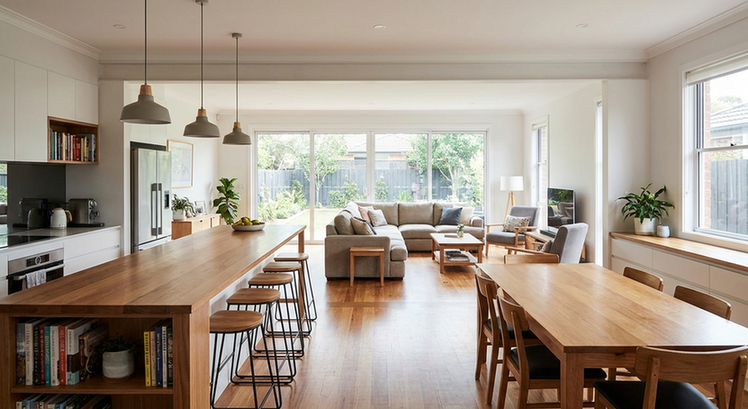
Many people dream of an open plan home. It can make your space feel bigger. It can also feel brighter and more modern. Removing an inside wall is a popular way to do this. It connects rooms like the kitchen and living area. This creates a great family space. But taking out a wall is a very big job. It is not as simple as it looks on TV. You must do it safely and correctly. Doing it wrong can be very unsafe. It could harm your whole house. This guide shows the safe way to get the open look you want.
First Step: Is Your Wall Holding Things Up?
Before you tear a wall down, you must ask one question. Is this wall a load-bearing wall? This is the most key step in the whole process. A load-bearing wall is a key part of your home’s frame. It helps hold up the weight of the floor or roof above it. Think of it like a person’s spine. It supports everything else. These walls carry weight down to the home’s foundation. You cannot just remove one without a good plan. This could cause big problems for your home.
Removing a load-bearing wall without proper support is a bad idea. The ceiling above could start to sag. You might see large cracks in other walls. In the worst case, part of your house could fall down. This is why you can never guess. You must know for sure. There are some clues you can look for at home. Your original house plans may show which walls are support walls. You can also look at the ceiling joists. These are the wood beams in your ceiling. A wall that runs at a right angle to these joists is often a good sign it could be load-bearing. Walls in the middle of a house can often carry weight, too, but in some newer homes they may just be simple room dividers.
These clues are just a starting point. They are not a final answer. Only a trained expert can tell you for sure. For this kind of job, you will usually need a licensed builder,[1] and you may also need a structural engineer if the work changes how your home stands or is supported,[2] depending on the rules in your state and what work you plan to do.[3–6] You cannot skip this step. They will come to your home and do a full check. They look at your home’s frame. They check the roof, floors, and foundation. They do careful math to find the loads. This tells them what the wall is doing. Our team has a lot of skill with structural renovations and can help guide you.
After the check, the engineer writes a report. This report explains what they found. If the wall is load-bearing, the report has a plan for a new support. This is often a strong beam made of steel or special wood. The plans show the exact size of the beam. They also show how to put it in. As said by building experts, this new beam takes the old wall’s job. It will carry the weight safely. This report is key to doing the job safely and legally. Some walls are not load-bearing. These are often called partition walls. They just divide rooms. Removing them is easier, but you still must be careful. They can still hide pipes and wires inside.
Hidden Dangers and Important Rules
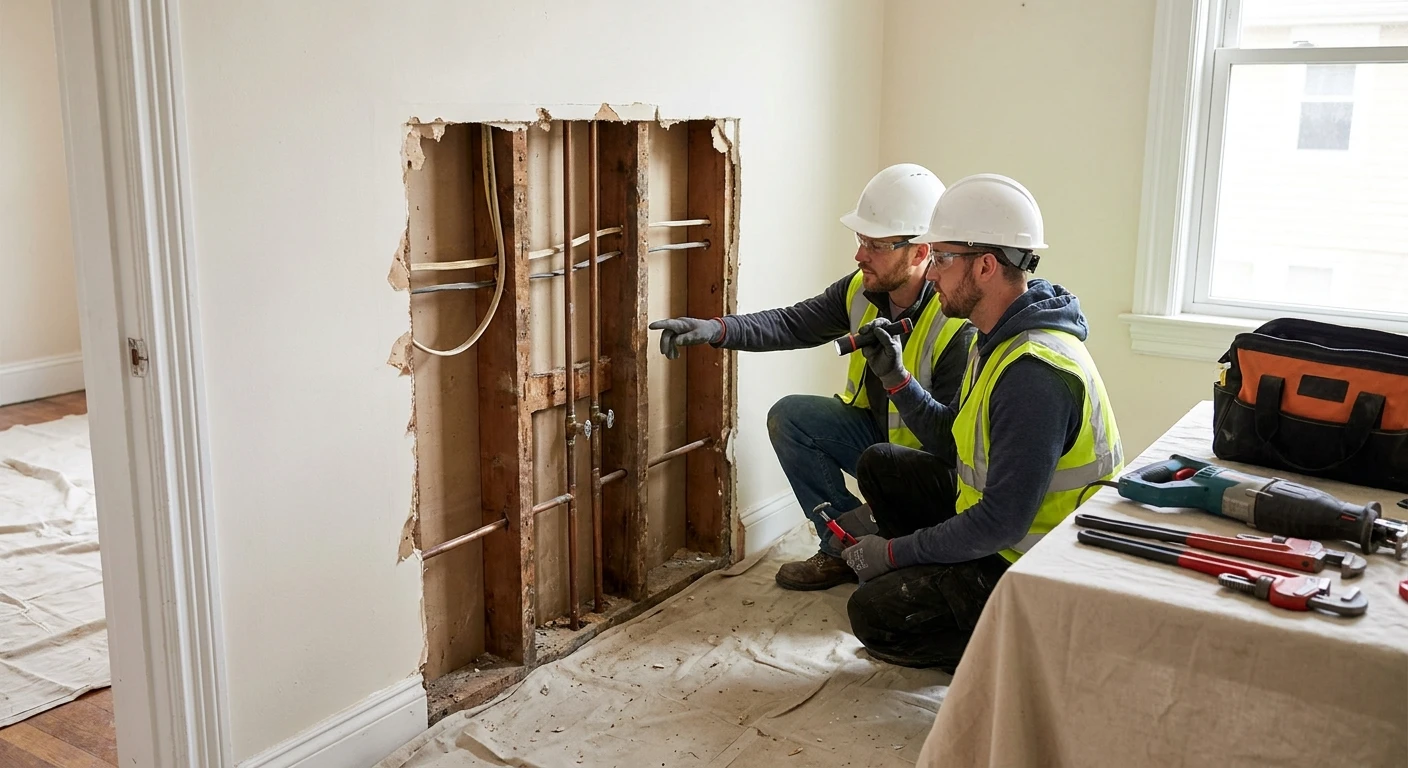
A wall is more than just plaster and wood. Many walls hide pipes and wires inside. Before you remove a wall, you must know what is in it. There could be wires for your lights and outlets. A licensed electrician must turn off and move these wires safely. Doing this yourself is very unsafe. There might also be water pipes for sinks or drains. A licensed plumber needs to move these pipes. Some homes have gas lines in the walls for heating or cooking. Only a licensed gas fitter can work on these.
Older homes in Australia can have other hidden risks. “If your home was built before 1990, there is a strong chance it contains some asbestos materials.[7–9]” [8][10][11] Asbestos was a common building material. It can be in wall sheets, insulation, and even floor tiles. It is safe if you leave it alone. But it is very harmful if you touch it. Cutting it lets tiny fibres into the air. Breathing these fibres can cause serious lung sickness. The Asbestos Safety and Eradication Agency warns you should always think asbestos is in older homes. You must hire a licensed expert to test for it. If they find it, they must remove it safely.
Lead paint is another danger in older homes.[12] In many Australian houses built before 1970, the paint can still have high levels of lead.[13][14] Sanding or scraping this paint makes a fine dust. This lead dust is poison if you breathe it in. It is very bad for children and pets. Like asbestos, you need an expert to test for lead paint. They have safe ways to remove it without making unsafe dust. Keeping your family healthy is the top priority during any remodel. This is a big part of our process for all kitchen renovations.
You also need to follow the rules. Removing a support wall is a big change. This means you will likely need a permit from your local council. Working in Australia without the right visa or work rights is against the law.[15–17] You could get a very large fine. The council could also order you to stop work. They might make you rebuild the wall. Work without a permit also causes future problems. It can be very hard to sell a home with these changes. Buyers and banks want to see that all work was done by law and safely. Also, this work can affect your home Insurance companies may limit, reduce or even refuse cover for damage that comes from unlawful or unapproved work, especially if it breaks building rules or was not disclosed to them. Getting the right permits protects you, your family, and your home’s value.
How the Wall Removal Process Works
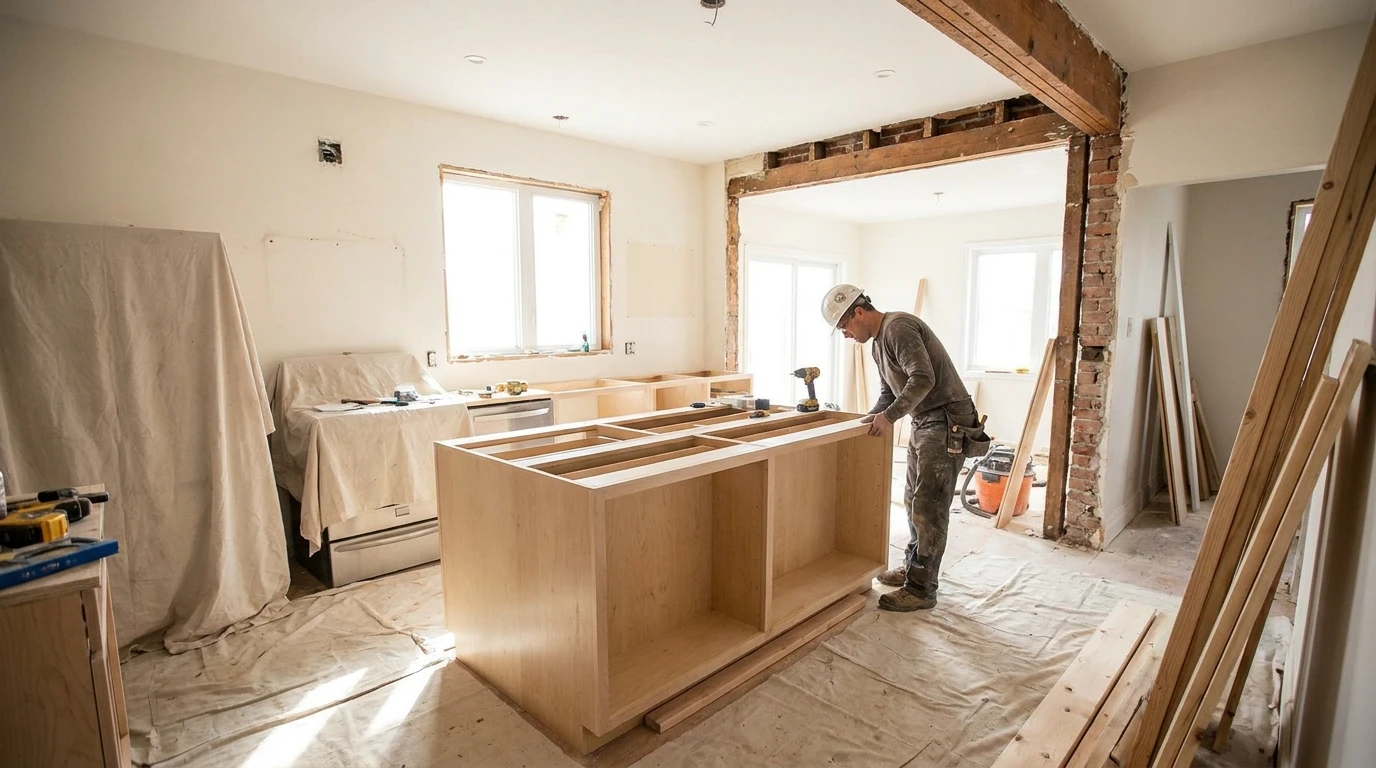
A safe wall removal has a clear set of steps. It all starts with a good plan. Think about how you want your new space to look and work. Once you have an idea, hire the right people. You will need a trusted builder and a structural engineer. They will work together to make your idea happen. The engineer will check the wall and make the plans. These plans show how to support the frame after the wall is gone. You give these plans to your local council to get a building permit.
Once you have the OK, the real work can start. The first step on site is getting ready. The expert team will turn off all power, water, or gas in the wall. They will also cover the rest of your house from dust and mess. They use thick plastic sheets to close off the area. If the wall is load-bearing, they put up short-term supports. These are strong posts that hold up the ceiling while the wall is taken down. This is a very important safety step. Then the tear-down starts. The wall is taken down with care, piece by piece.
After the old wall is gone, the new support goes in. The builder puts in the new steel or wood beam. They follow the engineer’s plan exactly. This becomes the home’s new, lasting support. With the new beam in, experts can come back. Electricians and plumbers run new wires and pipes for your new room plan. Next is the “making good” stage. This is where things get put back together. The team will patch the ceiling, floor, and nearby walls. New plasterboard is put up, and the walls are made smooth for painting. You can learn about our trusted team on our about us page.
The last step is often a final check. A building certifier may visit to check the work. They make sure the new beam is in the right way. They check that it all meets Australian safety rules. The cost to remove a wall can change a lot. A simple non‑load‑bearing wall might be as low as a few hundred dollars, and often sits between about $1,500 and $3,000. A load‑bearing wall is harder and costs more, usually from around $3,000 and sometimes going well over $10,000 for complex jobs. According to building industry data, the cost depends on the beam size and the work needed. Always have extra money set aside. A 15% to 20% fund for extra costs is a good idea. It helps cover things you did not plan for.
Ready for a More Open Home?
Removing an inside wall can totally change your home. It creates a bright, open, and friendly space for your family. But this job must always be done safely. Safety is the most important thing. Every step is key, from checking for load-bearing walls to handling hidden risks and following rules. Always use a licensed and skilled team of experts. An engineer and a builder will make sure the job is done right. They will make sure your home is safe, strong, and lovely. Ready to start planning your project? Contact us today to talk about your project.
[1] lawpath.com.au [2] boothengineers.com.au [3] designerplanning.com.au [4] www.wa.gov.au [5] dellwoodconstructions.com.au [6] serviceseeking.com.au [7] nsw.gov.au [8] nsw.gov.au [9] madda.org.au [10] asbestos.vic.gov.au [11] australianasbestosnetwork.org.au [12] sahealth.sa.gov.au [13] nsw.gov.au [14] painters.edu.au [15] homeaffairs.gov.au [16] homeaffairs.gov.au [17] bdo.com.au
Frequently Asked Questions
Can I remove an internal wall to create open plan living in my home?
Yes, many internal walls can be removed to create open plan living, but it must be done safely and in line with building regulations. The key is first confirming whether the wall is load-bearing and then installing proper support (such as a steel or engineered timber beam) according to an engineer’s design. JGBUILD can assess your existing structure and manage the whole process from design through to construction.
How do I know if an internal wall is load-bearing?
Signs a wall may be load-bearing include running at right angles to ceiling joists, sitting under another wall or roof structure, or being located near the centre of the house. Original house plans can also show which walls are structural. However, these are only clues—only a licensed builder or structural engineer can confirm this safely, which is why JGBUILD always does a proper structural assessment before work begins.
Is it safe to remove a load-bearing wall in my house?
It can be safe to remove a load-bearing wall, but only if new supports are installed correctly to carry the loads down to the foundations. Doing it without proper design and installation can cause sagging ceilings, major cracking, or even partial collapse. JGBUILD works with structural engineers to specify the right beams and posts and installs them to Australian standards so the new open space is both safe and compliant.
Do I need a structural engineer to remove an internal wall in Australia?
If the wall is load-bearing or you’re changing how the home is supported, you will generally need a structural engineer’s design and report under Australian regulations. Councils and certifiers usually require these documents for approvals and inspections. JGBUILD can coordinate the engineer for you, interpret their report, and then carry out the work exactly to specification.
What is the process for removing a wall and installing a support beam?
The typical process is: assess whether the wall is structural, obtain an engineer’s design, apply for any required approvals, then install temporary supports before removing the wall. After that, the new steel or engineered timber beam and any posts are installed, the structure is checked, and the area is plastered, painted, and finished. JGBUILD manages each of these stages so you don’t have to coordinate multiple trades on your own.
How much does it cost to remove a load-bearing wall and open up a kitchen or living area?
Costs vary widely depending on wall length, whether it’s load-bearing, the type of beam required, access, and how much finishing work (plaster, flooring, electrical, etc.) is involved. A simple non-structural wall is much cheaper than a long structural wall needing a large steel beam, posts, and council approvals. JGBUILD provides site inspections and detailed quotes so you understand all costs before committing.
What can go wrong if I remove an internal wall without a builder?
Removing a wall without proper structural checks and support can lead to sagging ceilings, sticking doors, cracking walls, and, in extreme cases, structural failure. You might also breach building codes, void insurance, or face issues when you sell the property. Using a licensed builder like JGBUILD helps ensure the work is safe, certified, and fully documented.
Do I need council approval to remove an internal wall for open plan living?
If the wall is structural or the change affects the building’s stability, you will usually need council or private certifier approval. Non-structural cosmetic changes often require less paperwork, but rules vary by state and local council. JGBUILD can advise what approvals are needed for your specific project and handle the application process as part of the renovation.
What is the difference between a load-bearing wall and a partition wall?
A load-bearing wall is part of the home’s structural frame and carries the weight of floors, roof, or other walls above down to the foundations. A partition (or non-load-bearing) wall simply divides rooms and doesn’t support significant structural loads. JGBUILD’s first step on any open plan renovation is to determine which type you have so the correct method is used.
Can JGBUILD help redesign my kitchen and living area after removing walls?
Yes, JGBUILD specialises in structural renovations and kitchen upgrades, so they can both open up the space and help design a more functional kitchen–living layout. This can include new cabinetry, lighting, flooring transitions, and integration of services like power and plumbing. The goal is to combine structural changes with a practical, modern open plan design.