Table of Contents
- Choosing the Best Kitchen Benchtop Material for Newcastle & Lake Macquarie Homes
- Benchtop Materials Compared: Durability, Safety and Cost
- Best Kitchen Benchtop Materials for Newcastle Coastal Homes
- How to Choose the Right Benchtop for Your Budget and Lifestyle
- Practical Tips: Maintenance, Resealing and Avoiding Common Mistakes
- Conclusion: Next Steps for Your Hillsborough or Lake Macquarie Kitchen
Choosing the Best Kitchen Benchtop Material for Newcastle & Lake Macquarie Homes
Your kitchen benchtop cops a lot. Hot pans, kids’ lunch boxes, wine spills and sandy beach bags from Warners Bay – it all lands here. So choosing the best kitchen benchtop material is one of the biggest calls you’ll make in a renovation. It sits right up there with layout and appliances, as any experienced Newcastle builder will tell you.
In 2026, there’s an extra twist for Australian homes as new rules and standards kick in across how we build, buy, rent and upgrade. From 1 July 2024, new work using engineered stone benchtops, panels or slabs with 1% or more crystalline silica is banned across Australia, with only tightly controlled exceptions for older contracts and existing installations.[1 – 4] That means many “quartz” options you see online are no longer allowed. This has pushed families in Hillsborough, Lake Macquarie, Newcastle and nearby suburbs to look harder at safer, longer‑lasting materials. Many turn to independent guides like the 2025 Guide to Kitchen Benchtops to compare what’s actually on the market now.
In this guide, we’ll walk through the key benchtop options and how they handle our coastal humidity. We’ll also cover what they cost, and which ones we at JG Building most often recommend as part of complete kitchen and home renovation services. By the end, you’ll be able to match a benchtop to your budget, lifestyle and home – without second‑guessing yourself.
Benchtop Materials Compared: Durability, Safety and Cost
There’s no single “best” benchtop. The right choice depends on how you cook, your budget, and how much maintenance you’ll do. For most Australian family kitchens, porcelain and sintered stone are the most balanced all‑rounders. Acrylic solid surface, well‑sealed granite and stainless steel also perform strongly in coastal areas. This pattern appears in independent round‑ups like Best Kitchen Benchtop Materials for Homes in 2025.
Since 1 July 2024, Australia has banned most work with engineered stone benchtops, panels and slabs that contain 1% or more crystalline silica, with a separate import ban due to start on 1 January 2025.[1 – 3] The aim is to protect workers from silicosis caused by cutting high‑silica stone. Existing engineered stone in your kitchen is fine to live with. The risk is in the fabrication dust, not in daily use. “However, some experts argue it’s still worth treating older engineered stone with a bit of caution.[1] Not panic, just common sense. While there’s no solid Australian evidence saying a benchtop that’s already in place is unsafe to live with, problems can pop up if you start drilling, cutting, polishing or doing a DIY sink cut‑out down the track.[2] That’s when dust can be created again, and that’s the bit that worries health folks who’ve seen what silicosis does.[1] So if you’re planning changes around an existing bench, it’s wise to bring in a licensed tradie who follows the new silica rules, rather than having a crack yourself on the weekend.[3] In short, living with it is one thing; working on it is another story entirely.” New projects now lean toward porcelain, sintered stone, laminate, acrylic solid surface and natural stone instead. Current government guidance on the engineered stone ban sets out the details for homeowners and builders alike.
From a silica‑risk point of view, the safest benchtop choices are acrylic solid surface (like Corian‑style products), laminate, timber and stainless steel. Other silica‑free or low‑silica materials also sit in this group. Porcelain, sintered stone and granite do contain some silica but at much lower levels than the old engineered quartz products. They can be handled safely when fabricators follow Australian dust‑control rules, which reputable teams like JG Building insist on when coordinating trades.
On cost, laminate usually wins for tight budgets. It often starts from the low hundreds per square metre installed. Timbers like blackbutt or bamboo sit in the mid range. Porcelain, sintered stone, granite and stainless steel move into the higher brackets. They can last for decades if you look after them – a point backed up in price comparisons such as 7 popular kitchen benchtop materials compared (with pricing). That long life is why many Lake Macquarie homeowners see them as an investment, not just a pretty surface. hipages.com.au
For busy homes with kids and pets, we generally suggest a hard, non‑porous surface that does not need sealing. Low‑silica mineral surfaces, porcelain and sintered stone are ideal here. They shrug off most stains, resist scratches from school bags and pet bowls, and cope with heavy cleaning after birthday parties. If the budget is tighter, a high‑quality laminate with good edge sealing can still handle family life with a bit more care. It also works well as part of a smart, budget‑friendly kitchen renovation package.
Best Kitchen Benchtop Materials for Newcastle Coastal Homes
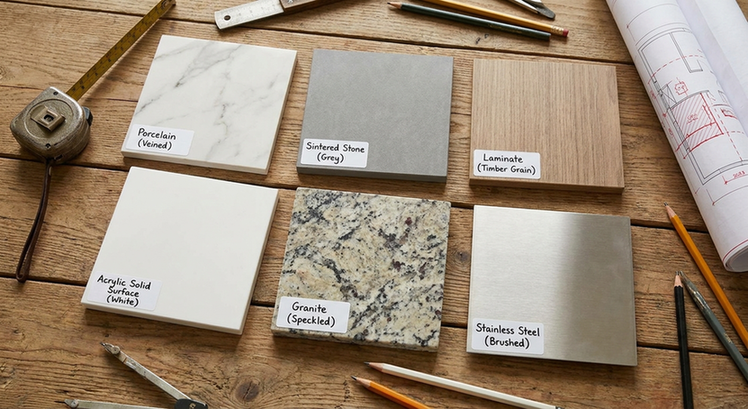
Our local climate around Hillsborough, Lake Macquarie, Toronto and Merewether is tough on benchtops. We get salt in the air, high humidity and strong sun through big windows. Dense, non‑porous, UV‑stable materials cope best in these conditions. It’s similar to the way robust finishes are needed for outdoor living areas in Lake Macquarie and Newcastle.
For indoor kitchens near the lake or coast, porcelain and sintered stone sit at the top of the list. They’re almost zero‑porous, so moisture and salt don’t get in. They’re also highly UV‑resistant, so pale colours stay crisp even in bright Adamstown and Dudley kitchens with big sliders. These materials are very hard, which means fewer chips and less scratching during everyday use. mastertops.com.au
Granite is another strong performer in Newcastle homes when it’s sealed regularly. It’s dense, heat‑resistant and handles salt air well. In our humid climate, you’ll likely need sealing a bit more often than the minimum guides suggest. The benefit is character – every slab is unique. This appeals to many Mayfield and Cardiff renovators chasing a more natural look, especially when paired with other upgrades like roof repairs and exterior refreshes.
Timber and bamboo benchtops look warm and coastal, especially with white Shaker doors and light floors. But there’s a trade‑off: in Lake Macquarie’s humidity, they need steady upkeep. Expect to oil or seal them every couple of years and be fussy about wiping up water near the sink. If you love timber, a good middle path is timber on an island with a more durable material around the sink and cooktop. This is a layout strategy we often use in tailored kitchen renovation designs.
Stainless steel suits serious home cooks. It’s heatproof, food‑safe and easy to clean. For coastal suburbs like Warners Bay or Toronto, we suggest marine‑grade 316 stainless where possible, as it’s specifically formulated to better resist pitting from salt‑laden air and sea spray than standard 304 grades. Over time it will pick up fine scratches, but many people like that soft brushed patina. It looks like a well‑used commercial kitchen and ties in nicely with other durable features like decks and covered outdoor cooking zones.
How to Choose the Right Benchtop for Your Budget and Lifestyle
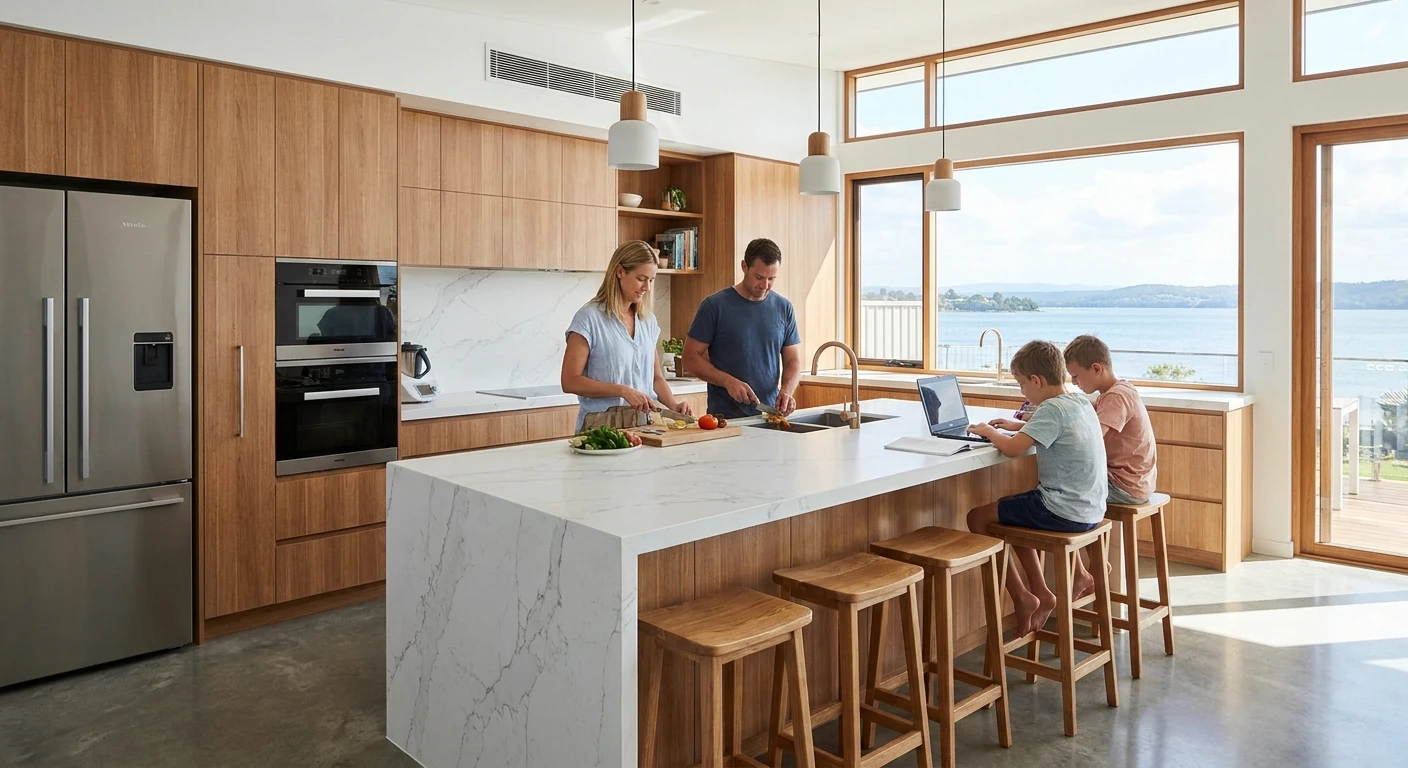
When we sit down with JGBUILD clients, we usually start with four questions. How hard do you use your kitchen? How much maintenance will you realistically do? What’s your total reno budget? And how long do you plan to stay in the home? Those same questions underpin many independent checklists like 11 Best Kitchen Benchtop Materials and What You Really Need to Know.
For busy Lake Macquarie families with young kids and pets, a low‑maintenance, tough surface is crucial. Porcelain, sintered stone or a good low‑silica mineral surface will handle food colouring, texta and scooter helmets dumped on the bench. They also cope with constant wiping. If your budget is under $10k for the whole kitchen, pairing quality laminate benchtops with smart joinery design can still deliver a fresh, bright space without blowing the numbers. This is especially true when you bundle the work into broader home renovation services.
Serious home cooks in Newcastle who do a lot of roasting, baking and pan‑searing often lean towards stainless steel or porcelain. You can move hot pots without worrying so much, and both surfaces clean up quickly after big weekend cook‑ups. For clients who bake sourdough or roll pastry, a section of stone like granite can be a nice “cold zone” built into an otherwise porcelain benchtop. This lines up with mixed‑material layouts recommended in resources like 12 Kitchen Benchtop Materials To Consider in 2025.
Eco‑conscious Hillsborough homeowners often ask about bamboo, local timbers and recycled materials. Bamboo and sustainably sourced timbers can be a good option if you’re willing to keep up the oiling. Some newer low‑silica and zero‑silica surfaces also use recycled content, so you can pair safety with a lighter footprint. The best approach is to look at the full picture. Think about how long the benchtop will last, how often it needs resealing, and whether it will still look good if you sell in a decade. This is the same long‑term thinking we apply to other upgrades like turnkey pool installation packages.
On resale value in Lake Macquarie and Newcastle, buyers tend to respond well to stone‑look benchtops in light neutrals. Porcelain, sintered stone and granite usually photograph beautifully for listings and help the kitchen feel “finished”. If you’re renovating to sell, it’s worth choosing durable, low‑maintenance options in classic colours. These are often safer than very bold or high‑maintenance surfaces that might worry future buyers. We use the same thinking for bathroom finishes in our bathroom and laundry renovation trend forecasts.
Practical Tips: Maintenance, Resealing and Avoiding Common Mistakes
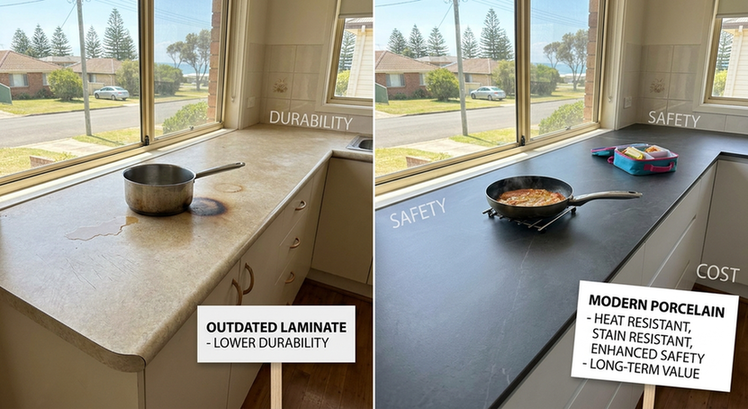
Whatever benchtop you choose, good care makes a huge difference in our coastal climate. In general, non‑porous surfaces like porcelain, sintered stone, stainless steel, solid surface and laminate just need regular cleaning. Use mild detergent and a soft cloth. Avoid harsh scouring pads and super‑strong cleaners. They’re rarely needed and often do more harm than good. They can also shorten the life of the finish, as lifespan comparisons like What is the life expectancy of popular countertop materials? point out.
Natural stones such as granite and marble need sealing on a schedule. In drier climates, that might be every few years. Around Newcastle and Lake Macquarie, many homeowners reseal more often, especially near sinks and dishwashers where water sits. A simple water‑drop test is a handy guide. Watch how quickly a drop soaks into the surface to know when it’s time. Most penetrating sealers are DIY‑friendly if you follow the instructions and work in a ventilated space. We can also include that advice as part of a broader kitchen renovation consultation.
Timber and bamboo are even more sensitive to moisture. Around Dora Creek and other spots close to the water, we see swelling and dark stains where finishes have worn off. Oiling or sealing on a regular schedule keeps the surface closed to moisture. Wiping spills quickly, using chopping boards and lifting appliances slightly on feet also help the benchtop breathe. This is the same kind of proactive care we recommend for timber decks and outdoor structures.
From a builder’s view, the biggest benchtop mistakes we see are simple but costly. People choose a surface that doesn’t match how the household really lives. They forget to budget for cut‑outs and edges. They also install stone too early in the build, so it gets damaged. Benchtops should go in after base cabinets are fixed and before splashbacks and final plumbing fit‑off. Protect the new surface straight away with boards or protective film, especially if other trades are still working nearby. hipages.com.au
Another trap now is confusion around “quartz” naming. Because high‑silica engineered stone is now banned for most new installations, products in that category have changed fast. Always check the silica content and ask for written details. Make sure your installer follows current Australian safety standards. If in doubt, materials like porcelain, sintered stone, acrylic solid surface, stainless steel, laminate and timber avoid the high‑silica issue entirely. They can also be paired with other council‑approved upgrades like new decks in Newcastle when you’re planning a bigger project.
Conclusion: Next Steps for Your Hillsborough or Lake Macquarie Kitchen
Choosing the best kitchen benchtop material isn’t about chasing the latest trend. It’s about finding a surface that suits your family, your cooking style and our coastal climate. In and around Newcastle and Lake Macquarie, that usually means dense, low‑maintenance options like porcelain, sintered stone, low‑silica mineral surfaces, or well‑sealed granite and stainless steel. Laminate and timber also play a role for tighter budgets or feature areas. This is the same balance of function and style we aim for across all building and renovation services.
If you’d like straight, local advice from builders who work with these materials every week, reach out to the JG Building team. We can walk you through real‑world options, pricing and finishes for your home in Hillsborough, Warners Bay, Toronto or beyond. We’ll help you choose a benchtop that still looks great many years down the track, whether it’s part of a full renovation, an indoor‑outdoor upgrade, or a broader plan that might also include a new deck with the right timber or composite choices.
[1] nsw.gov.au [2] safeworkaustralia.gov.au [3] safeworkaustralia.gov.au [4] aiha.org
Frequently Asked Questions
What is the most durable kitchen benchtop material for a coastal home in Newcastle or Lake Macquarie?
For most coastal homes around Newcastle and Lake Macquarie, porcelain and sintered stone benchtops are among the most durable options. They handle humidity, heat, stains and day‑to‑day knocks extremely well with very little maintenance. Well‑sealed granite, stainless steel and quality acrylic solid surface are also strong performers in coastal environments.
Is engineered stone still allowed for new kitchen benchtops in NSW after the 2024 silica ban?
From 1 July 2024, new work using engineered stone benchtops, panels or slabs with 1% or more crystalline silica is banned across Australia, including NSW, except for tightly controlled transitional cases. Existing engineered stone in your kitchen can stay in place and is generally safe to live with because the main risk is during cutting and fabrication. If you’re renovating, your builder will usually recommend porcelain, sintered stone, natural stone, laminate, timber or other low‑silica options instead.
What is the safest benchtop material to replace high silica engineered stone?
Porcelain and sintered stone are currently among the safest high‑performance replacements for traditional high‑silica engineered stone because they have very low crystalline silica content and are fabricated under strict controls. Many homeowners also consider stainless steel or acrylic solid surface if they want an even more work‑friendly surface. A good builder will confirm the silica content of any proposed product and how it will be fabricated.
How do porcelain and sintered stone benchtops compare to natural stone for families?
Porcelain and sintered stone are generally harder, more stain‑resistant and more heat‑tolerant than many natural stones like marble and some granites. They don’t usually need sealing and cope better with kids, hot pans and spills in a busy family kitchen. Natural stone can look beautiful and last decades, but it often needs sealing, more careful cleaning and faster attention to spills.
How much does it cost to install a new kitchen benchtop in Newcastle?
Costs vary widely depending on the material, thickness, edge profiles, cut‑outs and whether you’re changing the layout. Laminate is typically the most affordable, while porcelain, sintered stone and premium natural stone sit at the higher end of the range. JGBUILD usually provides benchtop pricing as part of a full kitchen renovation quote so you can compare a few material options against the same layout.
Which kitchen benchtop is best for low maintenance and easy cleaning?
If you want low maintenance, porcelain and sintered stone benchtops are hard to beat because they’re non‑porous, don’t need sealing and resist most stains and scratches. Acrylic solid surface is also easy to clean and can often be repaired or re‑polished if it marks. Laminate is simple to wipe down but is less heat and scratch resistant than the other options.
Can JGBUILD help me choose the right benchtop material for my renovation?
Yes. As Newcastle‑based renovation builders, JGBUILD regularly helps clients compare benchtop options during full kitchen and home renovations. They’ll look at how you cook, your budget, council and code requirements, and the coastal environment to recommend a short list of suitable products, then coordinate supply and installation with trusted fabricators.
What benchtop materials work best with coastal humidity and salty air?
In coastal suburbs like Warners Bay, stainless steel, porcelain, sintered stone and well‑sealed granite all handle humidity and salty air very well. Quality acrylic solid surface can also perform strongly if it’s installed correctly and cared for as recommended. Timber and cheaper laminates can still work but usually need more ongoing care and protection from standing water.
Do I need to replace my existing engineered stone benchtop because of the new ban?
No, the national ban targets the fabrication and installation of new high‑silica engineered stone, not existing benchtops already in homes. For most households, living with an existing engineered stone benchtop is considered low risk because the main hazard is the dust created during cutting and polishing. If you plan to modify, cut or remove it, you should hire licensed professionals who follow the new safety rules.
Does JGBUILD do benchtop‑only upgrades or just full kitchen renovations?
JGBUILD’s core service is complete kitchen and home renovations, where benchtop selection is integrated with cabinetry, layout and appliances. In some cases they may assist with benchtop replacement as part of a broader update, but it’s best to contact them directly to confirm whether a benchtop‑only project fits their current scope and schedule.