Table of Contents
- Designing the Perfect Alfresco Area for Year-Round Entertaining
- Planning Your Alfresco Layout and Budget in Warners Bay
- Key Warners Bay Rules, Safety and Surfaces
- Lighting and Heating for Year-Round Alfresco Use
- Indoor – Outdoor Kitchen Integration and Local Planting
- Bringing Your Warners Bay Alfresco to Life
Designing the Perfect Alfresco Area for Year-Round Entertaining
A great alfresco area turns a simple barbecue into a place where family and friends want to stay. “In Warners Bay and around Lake Macquarie, the mild, temperate climate invites outdoor living,[1] even as the seasons swing between hot, wet and cool.[2][3]” That means your alfresco design needs more than a nice deck and a cheap pergola.
This guide covers the essentials: smart layout, budget ranges, local rules, lighting, heating, and indoor – outdoor kitchen flow. You’ll see how to plan an area that works on a sticky January evening and a crisp June night, without wasting money on the wrong structure. It draws on ideas from resources like Designing the ultimate alfresco for your home and other Australian alfresco design guides.
Planning Your Alfresco Layout and Budget in Warners Bay
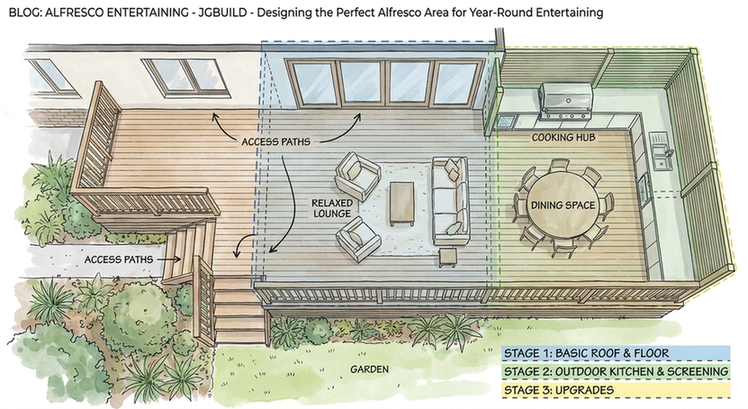
Start with how you actually live. Do you host big birthday lunches, quiet drinks for two, or Saturday sport nights with half the team? Sketch rough zones: a cooking hub, a dining space, relaxed seating, and clear access paths. In many Warners Bay homes, the best alfresco sits straight off the main living room so traffic flows easily. It often ties in with broader building and renovation services planned for the home.
Next, match what you want with a realistic budget. Across Australia, basic roofed patios or simple decks usually sit in a “budget” tier. Under‑roof alfresco rooms with outdoor kitchens sit higher. Recent guides show small outdoor living projects starting in the mid‑thousands. Costs rise as you add roofing, lighting and joinery. Larger, fully fitted spaces with outdoor kitchens, quality flooring and custom roofing can quickly climb into the tens of thousands, and well beyond for top‑end designs, as finishes improve.[1 – 3] This pattern appears in many alfresco design ideas articles that show how features quickly add to overall cost. tradieverify.com.au
A smart step is to include a 10 – 15% buffer in your budget for surprises like drainage problems or extra footing depth. Construction experts suggest this safety margin so projects stay on track instead of stalling when something hidden appears. procore.com
“If your site slopes – which is common in parts of Warners Bay and Cardiff – allow for noticeably higher costs for levelling and other site works.”[1 – 3] Options include simple cut‑and‑fill with a slab, a raised deck on posts, or a mix of small retaining walls and platforms. A raised deck is often the most cost‑effective way to create a level, stable entertaining area without huge earthworks. Choosing between a timber frame and composites is similar to the decisions explored in Timber vs Composite Decking for Warners Bay Homes. A raised deck also lets you hide services, drainage and storage under the structure.
When you plan in stages, you can build the “bones” first: roof, floor and wiring. Later, you can add an outdoor kitchen, screening and built‑in seating as your budget allows. This step‑by‑step method gives families in Warners Bay, Toronto or Mayfield space they can use now. It still supports a long‑term vision, much like how many outdoor living projects in Lake Macquarie and Newcastle are designed to grow over time.
Key Warners Bay Rules, Safety and Surfaces
Before you fall in love with a design on Pinterest, check what’s actually allowed. In the Warners Bay and Lake Macquarie area, you’ll find that most roofed alfresco structures do in fact need some form of council or certifier approval.[1 – 3] This might be complying development or a full development application, depending on size, location and how close they sit to boundaries. Fees vary by council and by the cost of works, so it’s worth getting early advice rather than guessing. This is especially true if you’re also planning new decks like those discussed in council approval guides for decks in Newcastle. allcertgroup.com.au
National building rules also shape details like barriers and stairs. The code requires safety barriers on decks or platforms where there’s a drop of 1 metre or more from the edge.[1 – 3] It also sets minimum heights and spacing rules for balustrades to reduce fall risk, especially for kids. Knowing these rules early stops you from designing a level change or open edge that later has to be boxed in with bulky rails. ncc.abcb.gov.au
For family homes in Adamstown, Merewether or Dudley, think about daily safety. Choose non‑slip surfaces for decks and paths, especially near pools or outdoor sinks. Many modern tiles and composite boards come in slip‑resistant finishes made for outdoor use. The best alfresco design advice, including guides like Best Alfresco Design Ideas & Tips For Your Aussie Backyard, repeats this point. Keep stairs wide, with even risers, and plan clear sightlines so you can watch children while you cook or chat.
Drainage is another must‑have. A beautifully tiled alfresco that floods in every storm soon loses its appeal. Gentle falls in the slab or deck, slim strip drains, and enough downpipes all help move water away from the house. On steeper blocks in Dora Creek or Toronto, you may also need surface drains or small retaining walls to divert hillside runoff around, not through, your entertaining area.
Finally, plan for fire safety. If you’re including a built‑in barbecue, pizza oven or fire pit, keep the structure away from flammable cladding and soft landscaping. Store gas bottles upright in a ventilated spot, not hidden in a sealed cabinet. A nearby fire blanket and extinguisher are simple, cheap additions that could one day matter a lot.
Lighting and Heating for Year-Round Alfresco Use
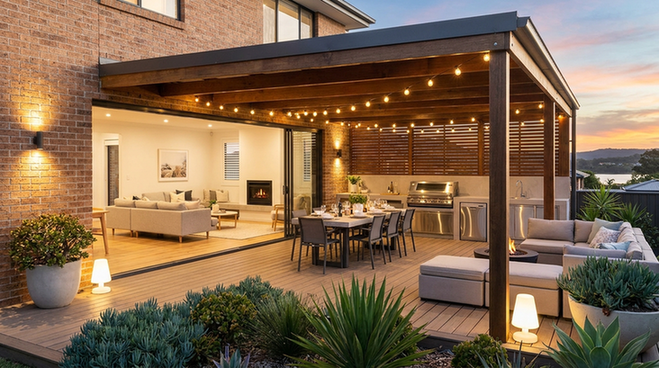
Lighting can make the difference between a space you use once a month and one you use three nights a week. Think in layers. First, provide soft general light so people can move around safely. In under‑roof areas, that might mean dimmable LED downlights. Over a freestanding deck in Cardiff or Mayfield, it could be simple wall lights or a ceiling fan with a light in a small roofed section. Many stunning alfresco design ideas suggest these options for inviting evening spaces.
Task lighting then brightens the spots where you really need to see. This includes the barbecue, prep bench, or outdoor fridge. Under‑cabinet strips, small spotlights and well‑placed wall lights all work well. Accent light comes last and adds mood. It can highlight feature trees, stone walls or a water feature. This final layer makes the space feel special on a Friday night.
Outdoor light fittings should be rated to handle moisture and dust. Higher IP ratings give better protection, which helps in coastal suburbs like Merewether or Warners Bay where wind‑driven rain and salt are tough on fixtures. Industry advice says the right IP rating cuts down on failures and early replacement. That saves you money over time. keouled.com
For heating, you want systems that give gentle, even warmth without blowing smoke or fumes back at guests. Common options include wall‑mounted electric radiant panels and gas radiant heaters under a well‑ventilated roof. A carefully placed fire pit set away from doors and furniture can also work. In cooler months around Lake Macquarie, a mix of windbreaks and radiant heat is often enough to make a July evening feel comfortable. This approach appears in many year‑round alfresco ideas from Australian designers.
Think about simple weather control too. Drop‑down blinds or sliding screens can block cold winds from the lake side while still letting air move on humid days. Insulated roofing or sarking under metal sheets helps steady temperatures and cuts radiant heat from the roof in summer. Together, these tweaks stretch your alfresco “season” from just summer into most of the year. They work best when paired with thoughtful outdoor living design that suits your block’s orientation.
Indoor – Outdoor Kitchen Integration and Local Planting
A smooth link between your indoor kitchen and alfresco makes entertaining feel almost effortless. Large sliding, stacking or bifold doors let you open up the wall when the weather is kind and close it when the breeze picks up. A well‑placed servery window with a simple bar ledge can have the same effect in a smaller space. It gives you an easy pass for food and drinks, much like the layouts in How to Create an Alfresco Living Space That Works All Year in Sydney.
Think of your indoor and outdoor cooking zones as one larger workspace. Keep the outdoor barbecue and prep bench close to the indoor fridge and sink so you’re not walking laps all night. A simple “triangle” between fridge, sink and cooktop inside, then barbecue and outdoor bench just outside, keeps movement efficient without feeling cramped. This setup also aligns with the kitchen and alfresco renovation services many Newcastle homeowners already plan.
Choose finishes that suit each other. If you have light stone benchtops and timber accents indoors, pick similar tones outside in materials that can handle weather. Many tile ranges offer inside and outside versions of the same look. The indoor tiles have a smoother finish for the kitchen, and the outdoor tiles have a grippier finish for the alfresco. Using them across both spaces creates a visual flow that makes your home feel larger. This trick is often suggested in stylish alfresco design guides.
Landscaping then softens the hard surfaces. Native plants that suit the local climate tend to be low‑maintenance and tough enough for Warners Bay’s conditions. Look for species that handle coastal influence and dry spells. Hardy grasses, small flowering shrubs and compact trees that do not outgrow the space all work well. Native planting not only makes care easier; it also supports local birdlife and gives the alfresco a sense that it belongs in its setting.
Plan watering early if you can. Simple drip systems or micro‑sprays on timers keep pots and garden beds healthy even when life gets busy. Add mulch to hold moisture and your planting will cope far better with hot spells and drying winds off the lake. Over time, this green frame becomes the backdrop that makes your alfresco feel calm, private and settled. It works especially well when paired with broader Newcastle builder outdoor living solutions that treat landscaping as part of the full design.
Bringing Your Warners Bay Alfresco to Life
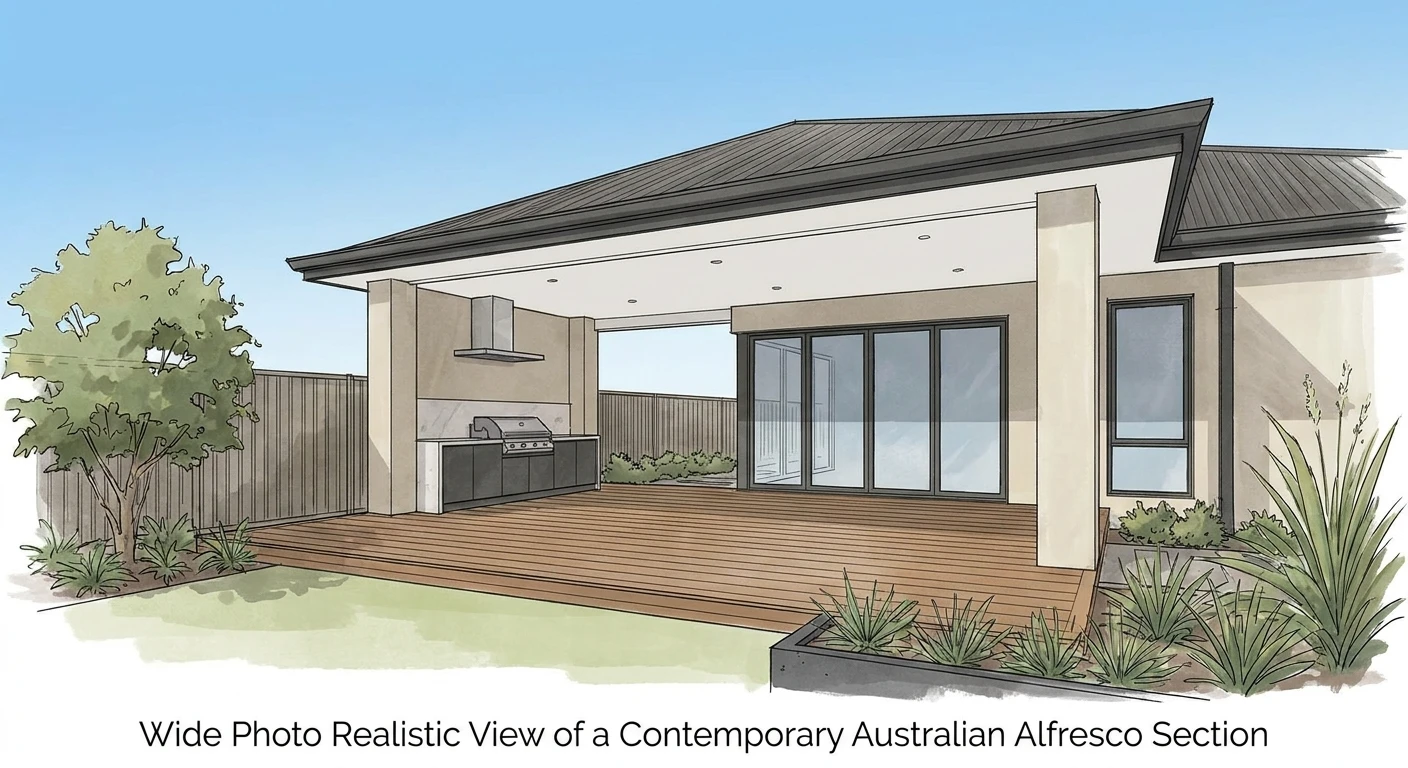
Designing the perfect alfresco area for year‑round entertaining is less about chasing a showpiece and more about getting the basics right. A clear layout, realistic budget, safe structure and sensible lighting and heating come first. From there, good indoor – outdoor flow and thoughtful planting turn a simple covered space into the real heart of your Warners Bay home, whether it’s part of a broader home renovation or a focused outdoor upgrade.
If you’re ready to sketch ideas, or you’re staring at a tricky sloping yard in Lake Macquarie and not sure where to start, now is the time to plan. Talk with a local builder who understands the terrain, the rules and the weather, and turn that underused patch of yard into the place everyone heads to first. Ideally, choose one with experience in decks, pergolas and outdoor living in Lake Macquarie, who can also advise on related projects from roof repairs to interior renovations, and whose track record (like that outlined in About JG Building) shows they know how to bring an alfresco vision to life.
[1] xmarathon.com.au [2] willyweather.com.au [3] theweatherchaser.com
Frequently Asked Questions
How do I start planning an alfresco entertaining area for my home in Warners Bay?
Begin by thinking about how you actually use the space: big family barbecues, quiet drinks, or regular sport nights. Sketch rough zones for cooking, dining, and lounging, and make sure there are clear access paths from your main living areas. In many Warners Bay homes, the most functional alfresco is directly off the main living room so people can move easily between indoors and outdoors. A builder like JGBUILD can help refine your layout so it works with your existing structure and renovation plans.
How much does it cost to build an alfresco area in Lake Macquarie or Warners Bay?
Basic roofed patios or simple decks typically start in the mid-thousands, depending on size and finishes. Once you add a proper roof structure, lighting, outdoor kitchen joinery and quality flooring, costs can move into the tens of thousands. Sloping sites common in Warners Bay and Cardiff can increase costs due to extra levelling, drainage and footings. JGBUILD can provide a tailored quote after assessing your site, design goals and desired inclusions.
What is the best layout for an outdoor entertaining area that works all year round?
A good year‑round alfresco layout separates key zones—cooking, dining, and lounging—while keeping them visually connected. Position the dining area close to the kitchen or barbecue for easy serving, and leave clear walkways so people aren’t squeezing past hot appliances. Include space for flexible furniture so you can reconfigure for large gatherings or small groups. Cover at least part of the area so you have protection from summer sun and winter rain.
What should I include in an alfresco area for both summer and winter use?
For summer, prioritise shade, airflow and cooling—think roof cover, fans, and good cross‑ventilation. For winter, factor in heating options like gas heaters, electric strip heaters, or a fireplace, along with wind protection from screens or walls. All year round you’ll want durable flooring, weather‑resistant furniture and good task and ambient lighting. JGBUILD can design a structure that integrates these elements so you’re not retrofitting them later at extra cost.
What’s the difference between a basic patio and an under-roof alfresco room?
A basic patio is usually a simple concrete or deck area with a light roof or pergola, offering shade and some rain protection. An under‑roof alfresco room is more integrated with the home, often built under the main roofline with better insulation, lighting, and sometimes outdoor kitchens and bi‑fold doors. Under‑roof alfrescos feel more like an extra living room and typically cost more due to higher structural and finish standards. JGBUILD regularly builds both options and can explain what suits your budget and property best.
Do I need council approval to build an alfresco or deck in the Lake Macquarie area?
Whether you need council approval depends on the size, height, and type of structure, as well as how close it is to boundaries and existing buildings. Small patios and decks may fall under exempt or complying development, while larger roofed alfresco areas usually need formal approval. Site slope and drainage can also trigger additional requirements. JGBUILD can check local regulations for Warners Bay and Lake Macquarie and manage approvals as part of your project.
How do I set a realistic budget for an alfresco renovation with JGBUILD?
Start by listing your must‑haves (like a roofed area and basic lighting) and your nice‑to‑haves (like an outdoor kitchen or custom seating). Use broad cost ranges—mid‑thousands for basic spaces and tens of thousands for fully fitted alfrescos—to decide what’s realistic for your property. Add a 10–15% contingency to cover unknowns such as drainage issues or deeper footings, especially on sloping sites. JGBUILD can then refine the budget after a site visit and concept design.
What flooring is best for a year-round alfresco entertaining space?
Look for flooring that is slip‑resistant, weather‑resistant and easy to clean, such as textured tiles, composite decking or sealed concrete. In areas exposed to rain, choose materials that perform well when wet and won’t become dangerously slippery. Consider colour and heat absorption too—lighter colours stay cooler underfoot in summer. JGBUILD can recommend flooring options that suit your site, budget and the look of your existing home.
How can I improve indoor-outdoor flow when renovating my alfresco area?
Position your alfresco directly off the main living, kitchen or dining area so it feels like a natural extension of your home. Use large sliding, stacking or bi‑fold doors to open up the wall and create a wide, level transition between inside and outside. Matching or complementary flooring can further blend the two spaces. JGBUILD often coordinates alfresco work with broader renovations to maximise this indoor‑outdoor connection.
Can JGBUILD help design an outdoor kitchen as part of my alfresco area?
Yes, JGBUILD can plan and build outdoor kitchens that integrate barbecues, benchtops, sinks, storage and fridges into your alfresco. They consider ventilation, weather exposure, gas and electrical requirements, and how you like to cook and entertain. Positioning, materials and services are all designed to handle Lake Macquarie’s climate and comply with local regulations. This integrated approach avoids costly changes later and ensures the kitchen works smoothly with the rest of your alfresco layout.